
Showing posts with label #muscidae. Show all posts
Showing posts with label #muscidae. Show all posts
Tuesday, 4 August 2020
Lispe tentacula at Loch Gelly, 3.viii.20
This spectacularly-palped fly was in some numbers on open sandy patches beside the east end of the loch, No prior county record and not many on NBN in Scotland. Its congener L.pygmaea is known from Tentsmuir.


Sunday, 2 August 2020
Hydrotaea diabolica from Cullaloe LNR
A nice addition to the reserve list and one of my favourite flies. Fantiastic legs


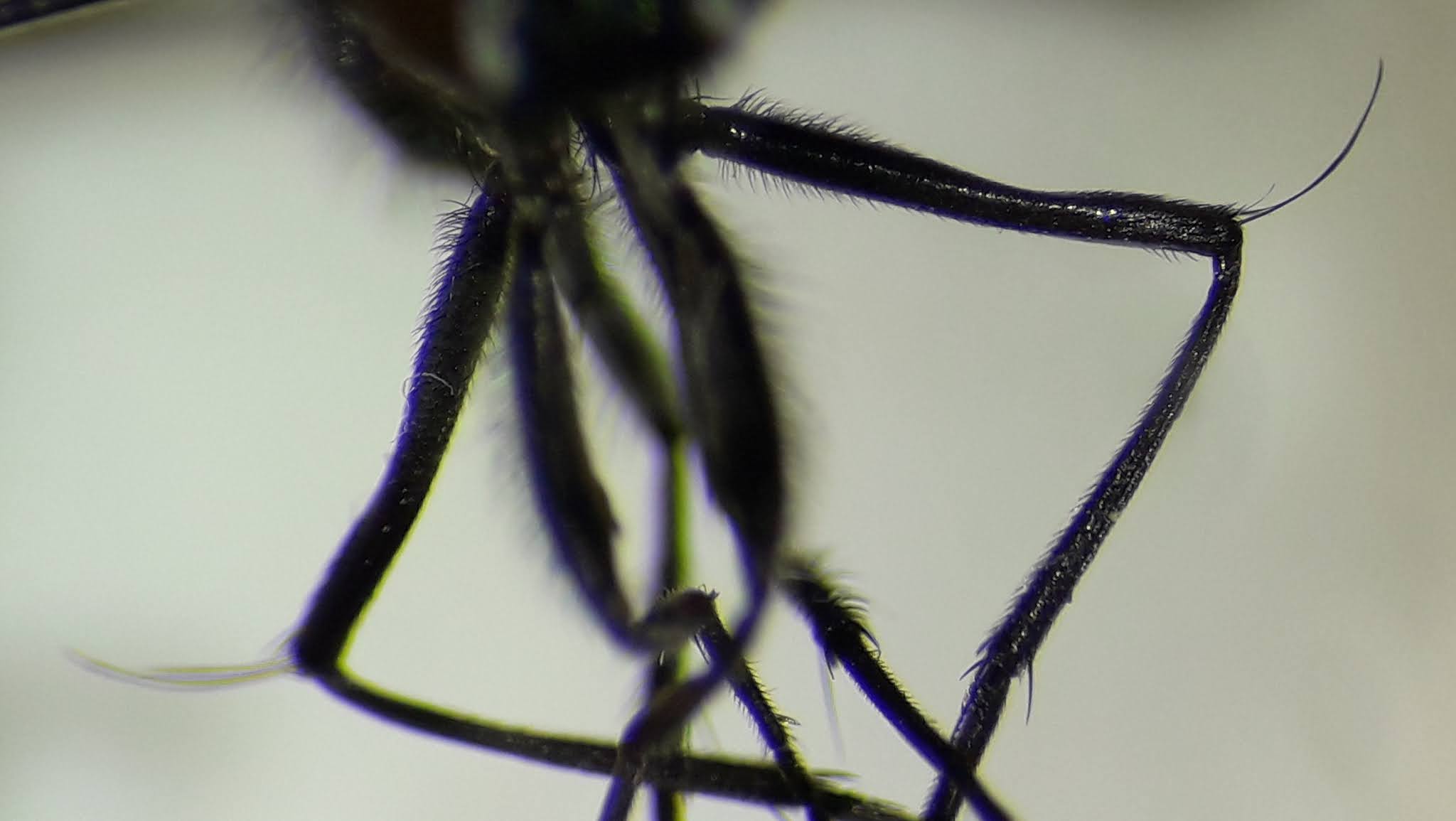 |
| Satan's knees |
 |
| Fore femur |
 |
| Hind femur |
Tuesday, 28 May 2019
Hydrotaea at Cullaloe LNR
Hydrotaea is a genus in the family Muscidae and they have (all of them?) very curious modifications to their legs. So far this year I've seen three species - armipes, meteorica and floccosa.
armipes is a new county record, meteorica appears to be second for Scotland while floccosa appears to be new to Scotland altogether - not a bad collection.


armipes is a new county record, meteorica appears to be second for Scotland while floccosa appears to be new to Scotland altogether - not a bad collection.
 |
| Hydrotea armipes |
 |
| A curious hook on femur 3 |
 |
| Femur 1 - two bumps and a tooth |
 |
| Hydrotea floccosa |
 |
| Femur 1 |


Friday, 29 March 2019

Friday, 25 May 2018
Hydrotaea diabolus, Dalgety Bay, Ross Plantation, 24/05/18
Hydrotaea diabolus,
Dalgety Bay, Ross Plantation
NT1683
24.v.2018
NOFI status - no Fife records
NBN status - 2 Scottish records
After finding a female a couple of days ago which was waiting to be identified, I ran into a male yesterday and what a fantastic fly it is! The overall impression is a glistening blue-black with a brightly flashing silver face when the light strikes it at the right angle. It has bizarrely long legs, especially the central ones, and the fore and hind legs bear weird and wonderful appendages. The central femur has a spectacular upturned hair on its apex.
Dalgety Bay, Ross Plantation
NT1683
24.v.2018
NOFI status - no Fife records
NBN status - 2 Scottish records
After finding a female a couple of days ago which was waiting to be identified, I ran into a male yesterday and what a fantastic fly it is! The overall impression is a glistening blue-black with a brightly flashing silver face when the light strikes it at the right angle. It has bizarrely long legs, especially the central ones, and the fore and hind legs bear weird and wonderful appendages. The central femur has a spectacular upturned hair on its apex.
 |
| The female - note pale haltere |
 |
| A male |
 |
| Peg leg - cilia on tibia also noteworthy |
 |
| The shovel like front femur |
 |
| Central femur "spur" |
 |
| Shiny face |
Wednesday, 2 May 2018
Phaonia serva, Dalgety Bay
A couple of males in Ross Plantation 1/5/18
First to catch the eye are the shining fronto-orbital plate between the eyes and the yellow calypterae/wing bases.
They have hairy eyes, pre-sutural acros and 2 pairs of pre-scutellar acros. Antenna is plumose but not much. t3 has one pd bristle, as expected of a Phaonia.
Thorax has a small central pale patch with quite substantial dark stripes beside (true in both specimens from this date)
Skidmore notes this is an anthophile which eats a lot of pollen. It was univoltine, emerging late May in the north of England and gone by July. Last year I had this in April so this is later, but still way earlier than noted by Skidmore.

First to catch the eye are the shining fronto-orbital plate between the eyes and the yellow calypterae/wing bases.
They have hairy eyes, pre-sutural acros and 2 pairs of pre-scutellar acros. Antenna is plumose but not much. t3 has one pd bristle, as expected of a Phaonia.
Thorax has a small central pale patch with quite substantial dark stripes beside (true in both specimens from this date)
Skidmore notes this is an anthophile which eats a lot of pollen. It was univoltine, emerging late May in the north of England and gone by July. Last year I had this in April so this is later, but still way earlier than noted by Skidmore.

Tuesday, 24 April 2018
Hydrotaea dentipes, Dalgety bay, 23/04/2018
Hydrotaea dentipes, m.
Dalgety Bay, Ross Plantation
NT1683
23/04/2018
Muscidae : Azeliinae : Azeliini : Hydrotaea : H. dentipes (fauna-eu.org)
One of the most widespread Holarctic muscids ("Muscidae Central Europe"), Facultative carnivorous larvae in carrion or dung. Adults may overwinter but egg laying in March noted and 1 week larva/2week pupation. This one probably emerged fresh.
Has black halteres and discal curves forward gently to apex. Front femur characteristic of subgenus Hydrotaeoides (Skidmore), dentipes group, in which the toothed femur and curved discal is a shared. character. Dark coloration and curved discal makes it recall a Muscina at first glance


Dalgety Bay, Ross Plantation
NT1683
23/04/2018
Muscidae : Azeliinae : Azeliini : Hydrotaea : H. dentipes (fauna-eu.org)
One of the most widespread Holarctic muscids ("Muscidae Central Europe"), Facultative carnivorous larvae in carrion or dung. Adults may overwinter but egg laying in March noted and 1 week larva/2week pupation. This one probably emerged fresh.
Has black halteres and discal curves forward gently to apex. Front femur characteristic of subgenus Hydrotaeoides (Skidmore), dentipes group, in which the toothed femur and curved discal is a shared. character. Dark coloration and curved discal makes it recall a Muscina at first glance


Monday, 4 December 2017
Schoenomyza litorella, Dalgety Bay, Bathing House Wood, 21/ix/2017
Species: Schoenomyza litorella, m
Loc: Dalgety Bay, Bathing House Wood,
Gridref: NT1582
Date: 21/ix/2017
NOFI: Dumbarnie Links
NBN: 38 records Scotland
A surprising looking muscid -the only representative of its genus in the Palearctic but a Holartcic species.


Loc: Dalgety Bay, Bathing House Wood,
Gridref: NT1582
Date: 21/ix/2017
NOFI: Dumbarnie Links
NBN: 38 records Scotland
A surprising looking muscid -the only representative of its genus in the Palearctic but a Holartcic species.


Friday, 1 December 2017
That 70s Fly - Azelia cilipes
Azelia cilipes, m.
Dalgety Bay, Fife
NT1683
29/11/17
From: sunny tree trunk
NOFI status: Aberdour
NBN: Scattered UK, 33 records Scotland, 0 Fife
Distribution: Holarctic (MCE)
With a beautiful suede jacket and fringed hind tibia this lovely fly puts on the style. Skidmore notes it's around in Cornwall in December and MCE says it probably winters. Have to agree with that. It's a dung breeder with cow, pig and horse all in the frame. From the coastal path where I've seen horse dung pretty recently I'd plump for that option. Pigs are far away. Cows aren't too far though and Polietes lardarius was also around. You never know. When I have a chance I might pot some horse poo, but you have to pick your moments.


Dalgety Bay, Fife
NT1683
29/11/17
From: sunny tree trunk
NOFI status: Aberdour
NBN: Scattered UK, 33 records Scotland, 0 Fife
Distribution: Holarctic (MCE)


Wednesday, 29 November 2017
Dalgety Bay - winter flies

Might have been frost on the ground but the woods towards the chapel still had some sunny spots to offer to a host of flies. The chapel did too but there were too many people around and I ran out of pots!
A sweep of one tree netted half a dozen Polietes - I had only seen two before I swished the net. Also from a sunny trunk was a single Phaonia subventa. Calliphora vicina was the main fly on the chapel walls, though some smaller fare was also present.
 |
| Polietes lardarius - from one sweep! |
 |
| Phanoia subventa female |

Friday, 24 November 2017
Muscina prolapsa, Dalgety Bay, Fife, 21/11/17
Muscina prolapsa, m.
Dalgety Bay, Fife
NT1683
21/11/17
MV Light
NOFI status: No records
NBN: Scattered UK, 35 records Scotland
Distribution: Holarctic (MCE)
Larvae predator of calliphorid larvae in carrion, raised from deer and horse carcasses (Skidmore)


Dalgety Bay, Fife
NT1683
21/11/17
MV Light
NOFI status: No records
NBN: Scattered UK, 35 records Scotland
Distribution: Holarctic (MCE)
Larvae predator of calliphorid larvae in carrion, raised from deer and horse carcasses (Skidmore)


Monday, 20 November 2017
Helina impuncta, Calais Muir Wood, 18/11/17
Also from the week previous, one female taken at SW corner during half hour wander
Species: Helina impuncta (1f.)
Loc: Calais Muir Wood, Dunfermline
Grid: NT1286
Date: 18/11/17
Habitat: birch part of mixed woodland
NOFI status: "widespread"


Species: Helina impuncta (1f.)
Loc: Calais Muir Wood, Dunfermline
Grid: NT1286
Date: 18/11/17
Habitat: birch part of mixed woodland
NOFI status: "widespread"


Subscribe to:
Posts (Atom)