Thursday, 14 April 2022

Paradelia intersecta

Paradelia intersecta is a super-common anthomyiid (flower fly) in spring, which can be swept from tree branches where large numbers of males can gather. It can be spotted from a sample in the first instance by its short, slightly downcurved abdomen. Unlike some other anthomyiids, the male can be confirmed by the leaf-like structures on the fifth sternite, which are visible without extracting the genitalia (though those are pretty characteristic too).

The nature of sternite 5 in male Anthomyiidae is often a useful character in identification. It's essentially the last "plate" on the underside of the abdomen before the genitalia. Even in the habitus picture below the prominent "leaf" is visible. For an essentially greyish, non-descript fly, this is a real time saver when sorting samples!

Short abdomen, big eyes (small gena)

Prominent leaf-like sternite 5

When extracted, the genitalia look like the image below, where you can see how the leaf-like extensions of s5 are attached.


Tuesday, 12 April 2022

Strobilomyia infrequens new to Scotland from Cullaloe Hills, 1st April

The first of the genus in Scotland, this is a fly, and a family, which mines conifer cones. S.infrequens mines Larch in particular, but doesn't appear to be fussy about which Larch. In this case I think it was hybrid, though that needs to be checked. It is noted as a "late" Strobiloyia, in the sense that the female has a long ovipositor, with which she places eggs between cone scales. The "early" species place an egg at the base of a cone. It will be interesting to see if affected cones can be found shortly. Larches are pretty ubiquitous in the UK, so it'll also be interesting if other Larchy places have Strobilomyia species.


Wednesday, 3 March 2021

Spaziphora hydromyzina, new to Fife from Lochgelly

Spaziphora hydromyzina, female

Loch Gelly, NT2092

24.ii.2021 (pupa), emerged 3.iii.2021

A pupa, picked up on the edge of Loch Gelly on 24th February, bore fruit today when an adult female Spaziphora was seen bumping about in the pot. It was still teneral and its face hadn't settled in, so when I started to key it later I thought I was going to be in the Sciomyzidae! When I looked again at the now coloured-in specimen the face had receded and it was more identifiable as a scathophagid.

This is the second time I've had this species, albeit it's not on the Fife list. The previous one I remember I had sufficient doubt about it not to record. Be nice to compare if I can track down the specimen in my store boxes.

pupa
2 3

4
teneral, with partial balloon-face
5 6 7
8
9
after drying out
10
11

12 ​ Post settings Labels #diptera, Published on 3/3/21 8:51 PM Permalink Location Options

Sunday, 18 October 2020

Liancalus virens - a nice Dodolichopodid from Aberdour

 From the coastal path in a few places east of Aberdour - several seen on damp walls. Already recorded from Dalgety Bay but maybe widespread in the right kind of habitat.


Polyporivora picta new to Fife from Dalgety Bay

 Swept from the area north of the railway toward Fordell in Dalgety Bay


Thursday, 20 August 2020

Grimshaw System - historic geekiness we can't live without

 In 1905 Percy Grimshaw, dissatisfied with the methods of describing bristles on the legs of flies while preparing a work on Hydrotaea (one of my favourite genera), devised a system which was, in Colyer and Hammond, referred to as "The Grimshaw System". I'm not sure how may people know he invented it, or even who he was, but I was buzzing today to find the original article from 1905 available here:

https://www.biodiversitylibrary.org/item/36031#page/201/mode/1up

He makes the case for the need, describes the system and then demonstrates its use on Calliphora erythrocephala M. (= C.vicina).

Percy not only did a whole lot for Scottish entomology but he gave us a basic alphabet that people use on a daily basis with almost certainly no idea where it came from.

More about Percy:

http://grimshaworigin.org/miscellaneous-grimshaw-individuals/percy-h-grimshaw-dipterist/


Tuesday, 4 August 2020

Lispe tentacula at Loch Gelly, 3.viii.20

This spectacularly-palped fly was in some numbers on open sandy patches beside the east end of the loch, No prior county record and not many on NBN in Scotland. Its congener L.pygmaea is known from Tentsmuir.


Monday, 3 August 2020

Dexiosoma caninum from High Valleyfield, 2.viii.20

Nice to bring a fly from a new location. This appears to be a woodland species, also very common in Ross Plantation, Dalgety Bay


Sunday, 2 August 2020

Hydrotaea diabolica from Cullaloe LNR

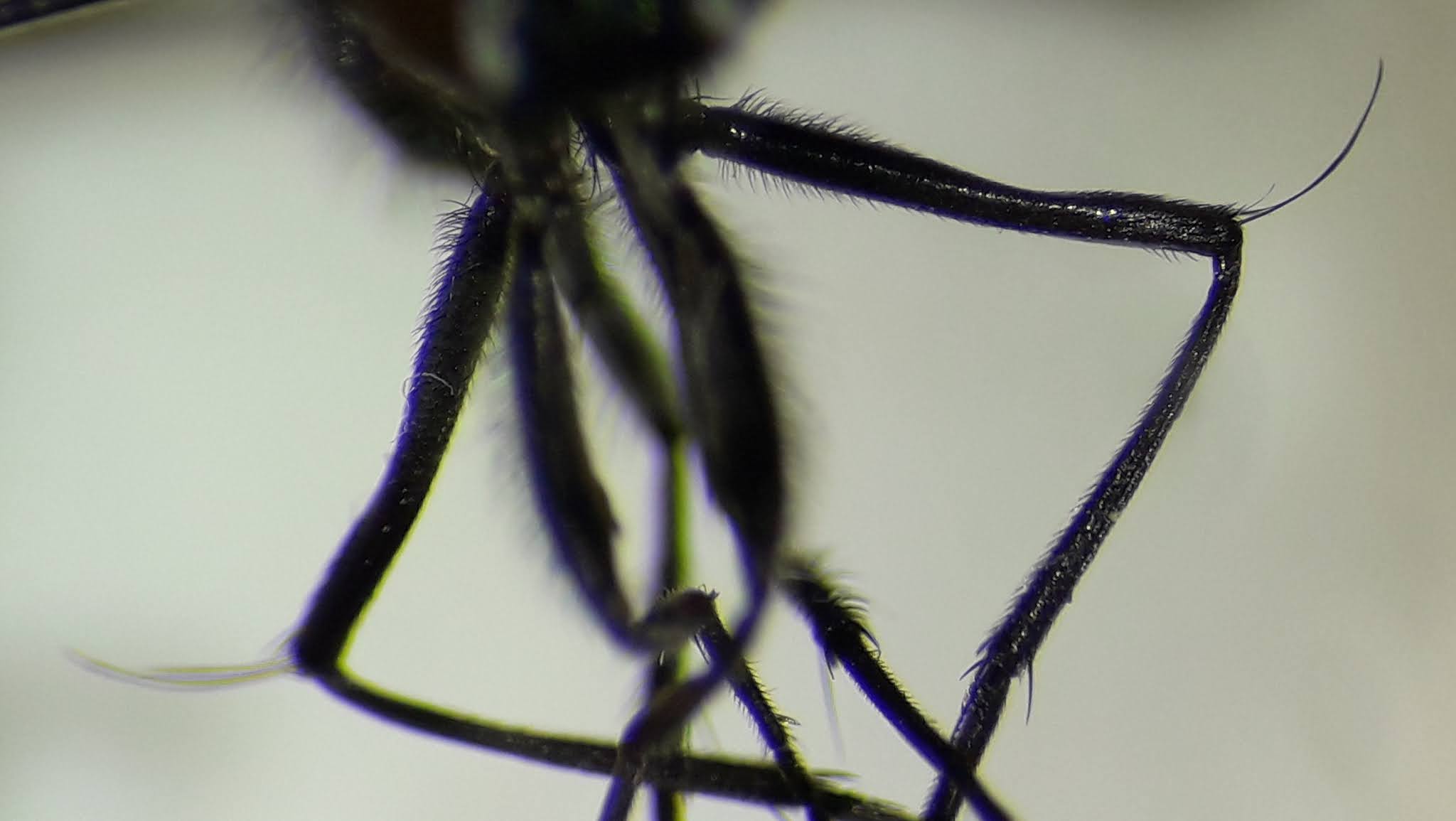
A nice addition to the reserve list and one of my favourite flies. Fantiastic legs


Satan's knees

Fore femur

Hind femur

Friday, 10 July 2020

Monday, 8 June 2020

Hydrophoria diabata at Braefoot, Dalgety Bay

A male anthomyiid taken yesterday looks very likely to be the above, though NBN only carries one record from Oxford area. This was at some point in the past synonymised with H.lancifer but was subsequently separated again. Presumably this has had an effect on recording and there may be lancifer records which are actually diabata. I have sent pics and await confirmation (edit: confirmed). This is the 2nd confirmed British record, though some may have slipped through under the guise of lancifer.


plumose arista not so common in Anthos

Hook tip

note also the long epandrium

Sunday, 31 May 2020

Calliphora subalpina, Dalgety Bay - Braefoot

In these covid times the lack of variety in location speaks for itself, but this species I've found here, at Cullaloe LNR and Lochgelly, so there's a good chance it's at all my other patches with some woodland too. Lochgelly doesn't even have much woodland (at least, on the north bank where I would have found it. Those three are the only Fife records I know, but Calliphoridae are badly under-represented in Fife recording.


Thursday, 28 May 2020

Norellisoma spinimanum in Dalgety Bay

Up to no good in the undergrowth, and with those spines you wouldn't want to be a prey item! Known from a few other sites around the county, this probably isn't an uncommon fly.


Monday, 18 May 2020

Mydaea urbana and Fannia lustrator

Lots of fly action now the leaves are green and the temperature's rising. These two species from different families (Muscidae, Faniidae) have a lot in common regarding appearance, but a dark front femur is common across many families, especially on the fore/upper parts. I'm sure i read somewhere that melanin makes feathers stronger and maybe it's a similar reason, but I might be misremembering that entirely.


Monday, 20 April 2020

Cheilosia chrysocoma at Cullaloe LNR

An unexpected spring surprise basking on the fence in the sun. Already recorded from Fife but new to the reserve and new to me